


From Athens to Bayonne, The Boat Art Collective embodies the need for art that promotes solidarity. This Saturday, they were in attendance at the 10th edition of the Haizebegi Festival.
From Lesbos to Athens
The story of the Boat Art Collective began in late 2019, in Europe’s most overcrowded detention camp. In Mória (on the island of Lesbos, Greece), up to 22,000 people are detained—ten times its regulatory capacity. While waiting—often for a long time—for their asylum cases to be processed, the migrants manage to organize themselves to forge bonds of solidarity.

For Iman Alidoosti, artistic expression is a way to cope with the hardships of daily life. It is through her introductory theater classes that the members of the collective come together to share ideas, create, and support one another. In 2021, The Boat Art Collective presented “The Boat,” an interdisciplinary, nonverbal theatrical performance, to advocate for the rights of refugees by sharing their personal stories.
The collective now includes about thirty artists. Some of them have decided to settle in the Greek capital, where they are working to open The Boat Art Center, a cultural center offering three spaces for artistic expression: movement, visual arts, and music. In Athens, they hope to reconnect with those who remain in a state of forced immobility after leaving the camps. But for The Boat Art Collective, the opening of the Athens center is just one step. Their goal is to open similar spaces in several other major European cities.

Art as a Practice of Solidarity
Since 2015, the European Union has militarized and outsourced its borders, criminalized rescue at sea, and pursued a policy of illegal deportation. On Lesbos, in the face of a criminally negligent lack of a reception policy, NGOs have stepped in. But these organizations still give displaced persons and refugees far too little decision-making power. This is why the Boat Art Collective’s project, “ ,” is unique and indispensable. Founded by asylum seekers born in Iran and Afghanistan, it is built around shared values of self-organization, inclusion, anti-racism, and a radical rejection of nationalism.
Since 2022, the collective has operated asa “social cooperative enterprise.” It is organized according to egalitarian and cooperative principles: each member has an equal say in the decision-making process. Against a backdrop of mass unemployment and institutional failure, the organization seeks to include marginalized communities and amplify their voices in the Greek and international public spheres.
The Boat Art Collective in Haizebegi
For a week, The Boat Art Collective held a residency in Bayonne for the Haizebegi festival. The collective worked closely with students in the specialized theater program at the Maurice Ravel Conservatory to present an original production. The performance took place this Saturday in the auditorium of the Cité des Arts. In the darkness, three voices rise up. They tell of a world without borders, gradually corrupted by greed and indifference. Then the narration gives way to an hour of music and choreography, by turns menacing and liberating.
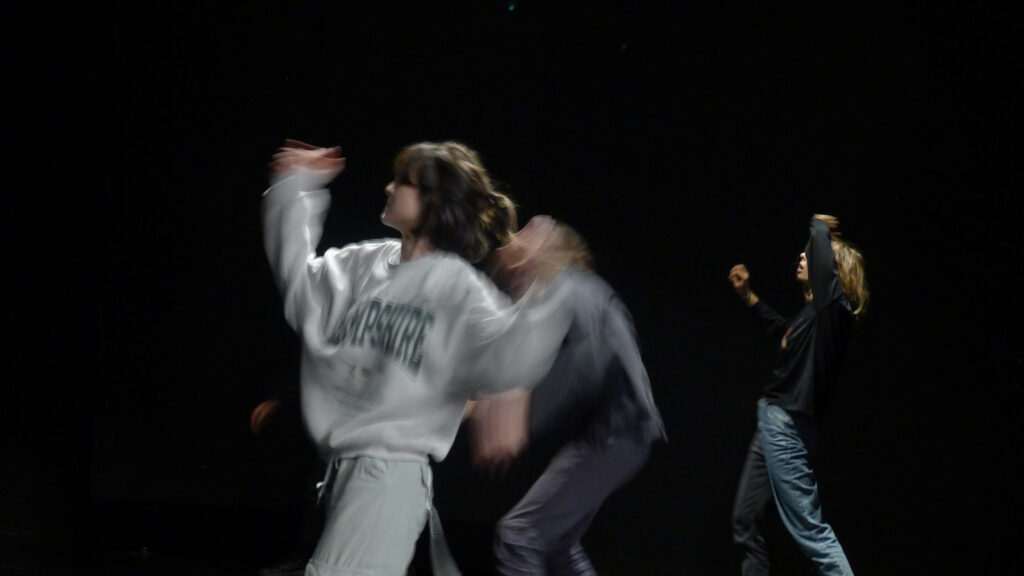
The workshop will undoubtedly leave an unforgettable impression on its participants, including Margot, who had an exceptional human experience: “They gave us so much that it was impossible not to be just as generous in return.” As for director Iman Alidoosti, he’s sure to leave something behind in Bayonne—just to make sure he’ll have to come back.
Margot Artur de Lizarraga
View projects by The Boat Art Collective
Support The Boat Art Collective
A study published on the Moria camp
During the Haizebegi meeting, German researcher Martin Gerner presented his book *Moria.System.Zeugen*. Having made the Greek island of Lesbos his field of study for several years, he reveals it as a tragic crossroads on the routes of exile between Afghanistan and Europe. His work highlights the multiple causes of social conflicts in refugee camps across Europe—not only among the refugees themselves, but also between local residents and humanitarian workers. He demonstrates how the latter are part of a humanitarian industry driven by increasingly dominant economic forces. As a result, NGOs sometimes unthinkingly place themselves at the service of state missions, without taking sufficient account of the refugees’ living conditions or the demands of their needs.
See the book: *Moria.System.Zeugen* by Martin Gerner
By the same author: *Finding Afghanistan*, published by Modo