


The Mural
The Geneva Convention Relating to the Status of Refugees, commemorated with a mural created by refugee children
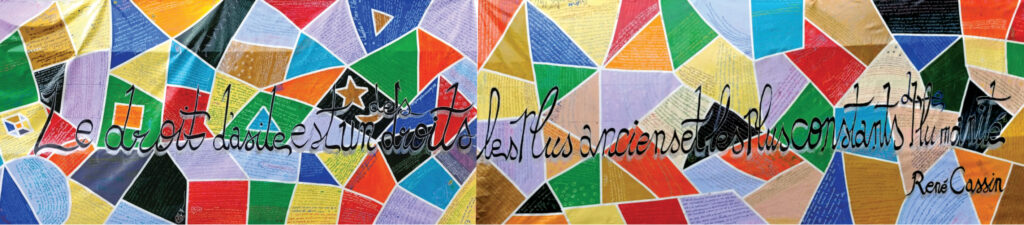
Visual artist Omar Ibrahim presents a mural celebrating the Geneva Convention Relating to the Status of Refugees. It was created by young men at the Don Bosco Institute in Bayonne. These minors, who have fled their home countries—mostly from West Africa—devoted themselves entirely to this project for two weeks in August to complete the artwork under the artist’s guidance. This project fueled their desire to develop their own identities. Each of them was able to write one of the convention’s articles in French using calligraphy inside each colored geometric shape that makes up the mural’s mosaic. “Many of them discovered themselves through this artistic act,” says Omar Ibrahim.
“My experience is that of a Syrian artist and a man living in exile, like many of his compatriots. This experience, which has had its advantages and disadvantages, influences my work as an artist. Indeed, I cannot escape politics and the humanitarian tragedy it causes. I cannot escape what is happening around me, both in the world and in Syria, a country for which I feel nostalgia.”
“If politics defines our lives, nostalgia defines the way I work. It has led me to return to the elements of my memory and to envision the future through them. In this way, my artistic practice allows me to look more deeply at my memories, my home, and my country. The positive aspect of this exile is the ability to continue my artistic journey here in France and to encounter the experiences of other artists that I had only seen in books when I was in Syria.”
“My artistic work is about healing the pain within me that has grown in recent years—
ly in step with the pain experienced by my people over nearly nine years—and the pain of so many people around the world who are fighting for their dreams and their right to freedom and democracy.”
“Working on my culture has thus become an act of living and of resistance. Such work has a profound influence on our desire to survive after everything we have already seen and endured.”
Read the rest of Omar Ibrahim's story in the magazine *Hommes & Migrations*
Watch the video profile of Omar Ibrahim
Tribute to Luigi Nono
To mark the centennial of the Italian composer’s birth, soprano Valérie Philippin’s radiant voice brings *La Frabbrica Illuminata* to life for the first time in public, within the master’s world of spatialized sounds: songs, shouts, choruses, and factory noises originally recorded on magnetic tape.
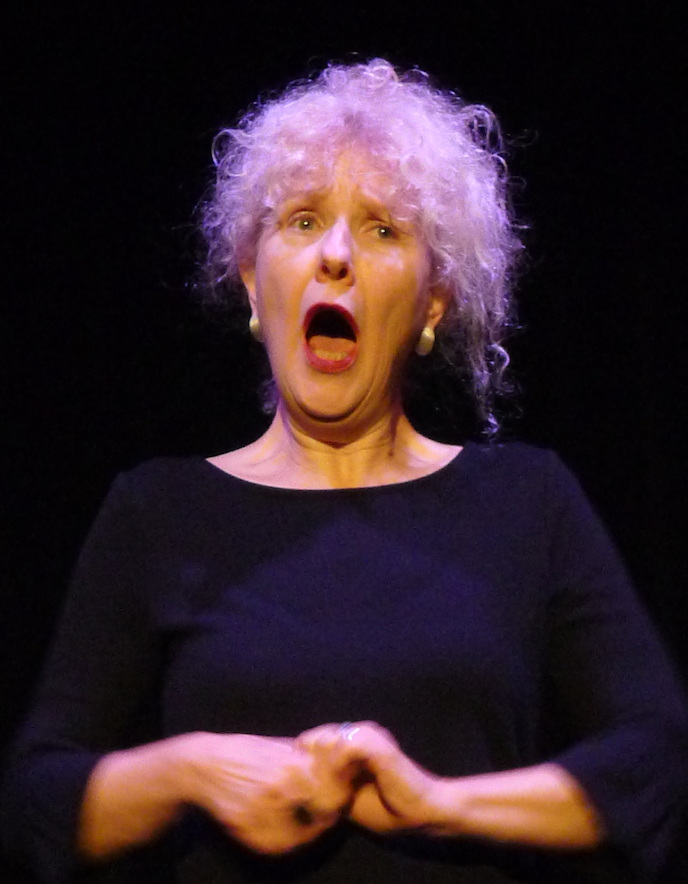
Valérie Philippin
“One day you hear a voice on the radio doing incredible things. She speaks, she sings, she speaks-sings and sings-speaks, she hums, she bursts out laughing, she enchants, she’s totally lyrical, she swings in the low notes and takes on a Rossini-esque quality in the high notes, she giggles and vocalizes all the way to the clouds, and her voice deepens and takes on limitless color, she embraces Baroque classicism in plainchant—erudite yet accessible—she burns out under every lantern, too close to the light, too far into the depths, too high to let herself go. Ecstasy and loss, total risk-taking, striding through free time, a dazzling ultra-virtuoso, at one with her contrasts, unleashed across all realms of wild, electric unconsciousness—peaceful, sensual, luminous, and intelligent. And then you say to yourself: “Ah, there it is, that’s it. That’s exactly what I want to do.”
Visit Valérie Philippin’s website
• Lecture — Luigi Nono and La Fabbrica Illuminata: A Composer of His Time
Laurent Feynerou paints a portrait of an artist who is as committed to his musical work as he is to putting into practice his own vision of true communism.
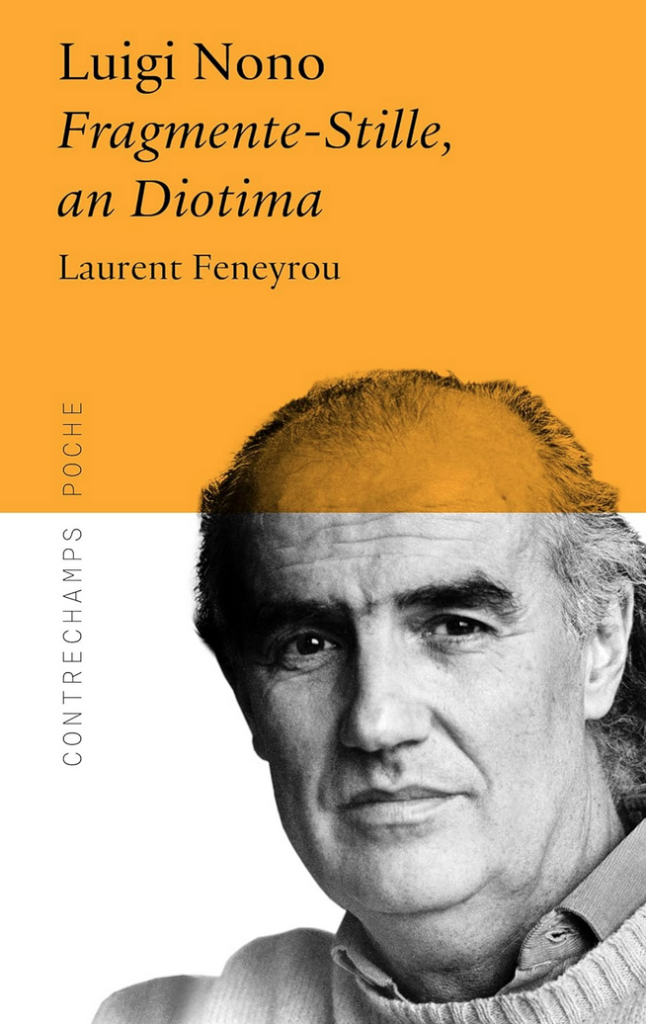
Laurent Feynerou
Profile and publications
His book Luigi Nono: Fragmente-Stille, an Diotima, published by Contrechamps, has been selected for the 2022 France Musique-Claude Samuel Book Prize.
Read the article about him on the France Musique website