


The all-female quartet Umbra infuses Icelandic musical heritage with its own unique flair: simply enchanting!
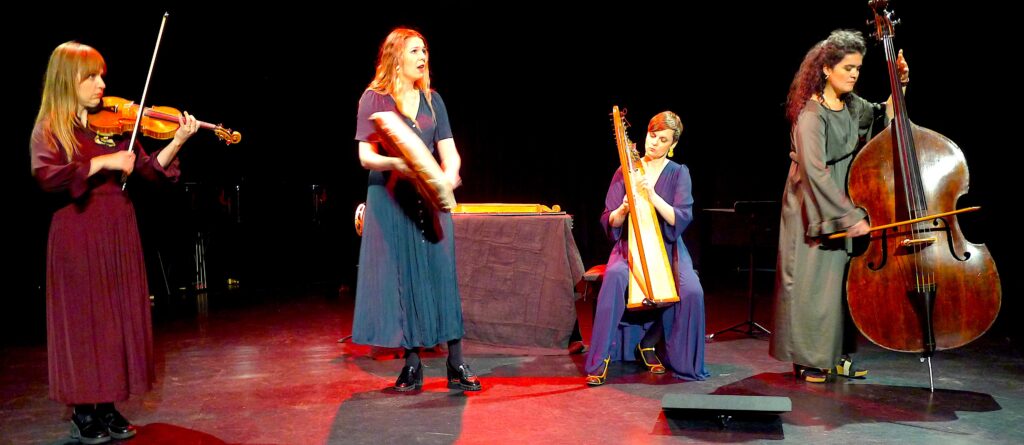
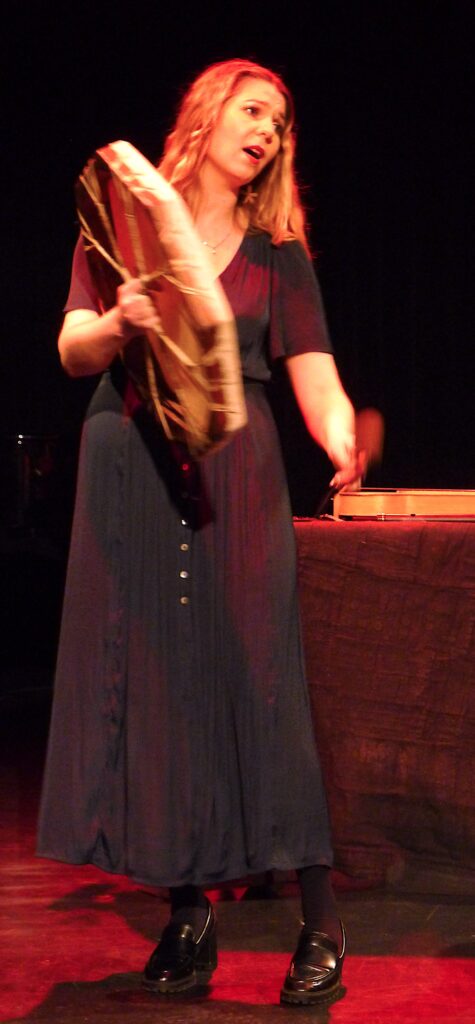
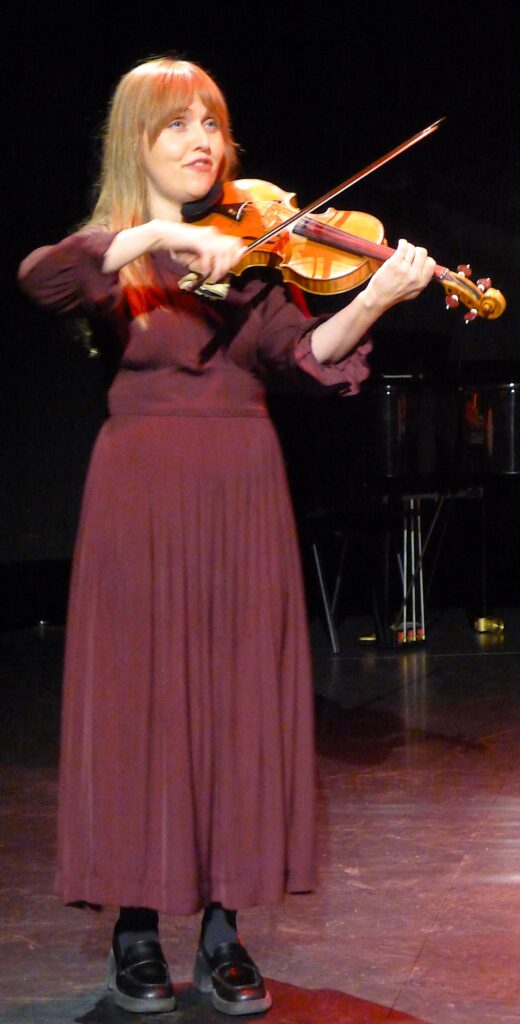
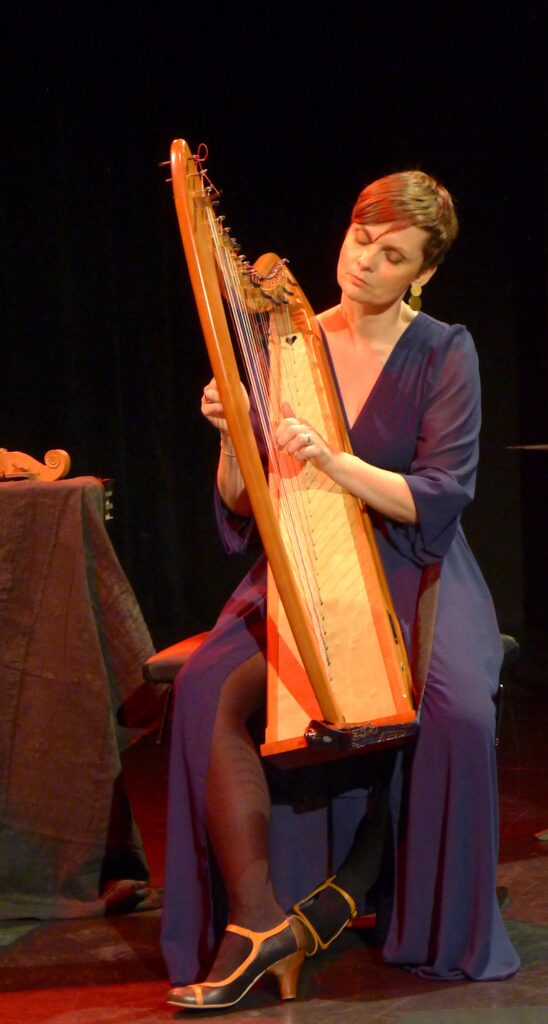
The Icelandic ensemble Umbra was founded in 2014 by four professional musicians united by a shared passion for early, traditional, and contemporary music: Alexandra Kjeld (double bass and vocals), Arngerður María Árndóttir (Celtic harp, organ, and vocals), Guðbjörg Hlín Guðmundsdóttir (violin and vocals), and Lilja Dögg Gunnarsdóttir (lead vocals, percussion, and flutes). These four inspired musicians craft a musical world all their own, developing a sound that is uniquely theirs. Using original arrangements, they perform medieval melodies drawn from Icelandic sacred and secular repertoires, as well as from continental Europe, alongside traditional songs.
The Umbra ensemble performs regularly in Iceland and throughout the Nordic countries, collaborating with other artists in the fields of music, visual arts, and dance. Their debut album, *Out of Darkness*, was released in early 2018 on the independent label Dimma. That same year, their second album, *Solstitium*, won the Album of the Year award at the Icelandic Music Awards (IMA). Released in 2019, the group’s third album, *Llibre vermell*, was also nominated by the IMA. Their fourth album, *Bjargrunir*, released in 2022, solidified the group’s reputation as one of the most compelling voices from the North. In 2024, they just completed a major tour in China.
The Interview with Alexandra Kjeld
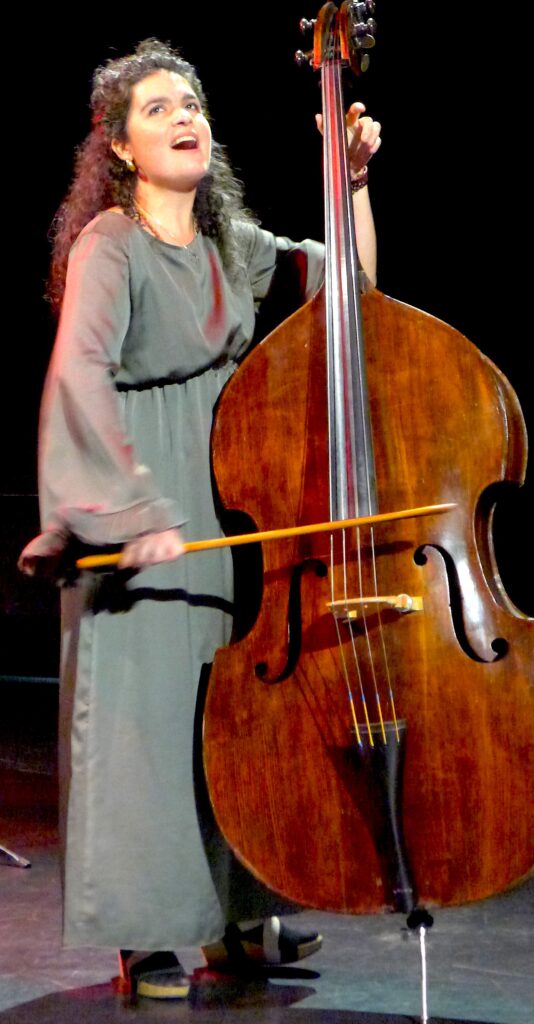
The double bassist with the Umbra ensemble studied musicology for two years at the University of Toulouse. She enthusiastically answers François Bensignor’s questions.
— What has been the career path of each of the four musicians who now make up the Umbra ensemble?
— How would you describe the characteristics of Icelandic music?
— How did you meet the other musicians to form your band?
— How did you put together the pieces that allowed you to develop the repertoire you perform today?
— How can we preserve and promote this Icelandic musical heritage that is so dear to you?
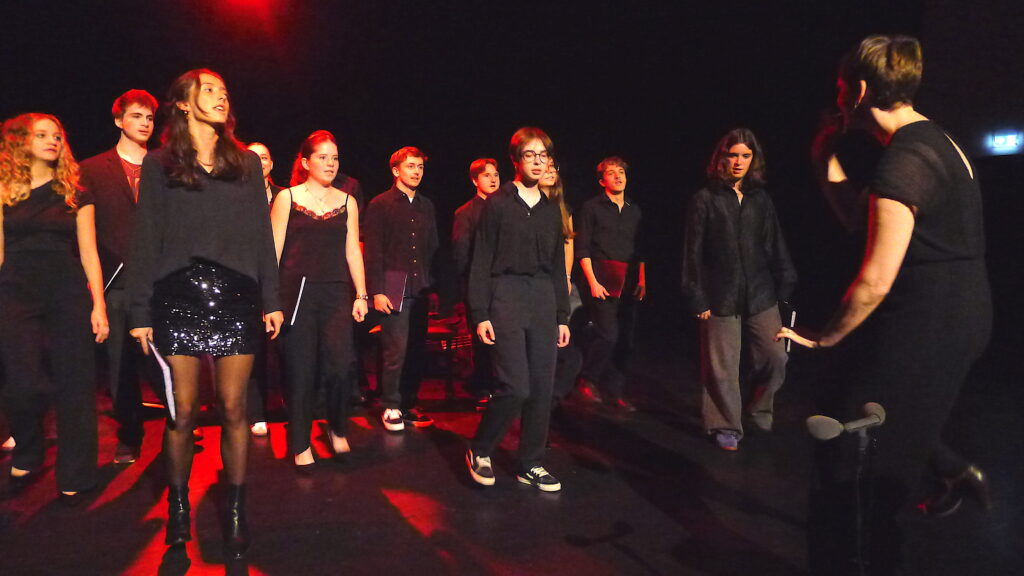
— Can you tell us about the workshops you led during your stay in Bayonne, aside from your concert for Haizebegi?
— Could you tell us a little more about the repertoire for your concert?
— Historically, have women played a significant role in Icelandic society?
Official Meeting on the Establishment of a Basque Cultural Center in Northwest Iceland

As part of the Festival of Science and with the support of the CNRS and the Marc Bloch Center (Berlin), the Bayonne City Hall is hosting the organizers of the exceptional project to establish the Basque cultural center “Baskasetur” in Djupavik, in northwestern Iceland: Albaola, Haizebegi, the University of Iceland, the Icelandic Association of Friends of the Basques.