The Massacre of Basque Whalers in One of the Fjords in Northwest Iceland
Deep-sea whaling, in particular, in the waters off Newfoundland and later in Icelandic waters, was a thriving industry for Basque ports. Two glossaries of a Basque-Icelandic pidgin have been found in Iceland, the result of commercial relations between fishermen and the local population. But a tragic event occurred in October 1615: the massacre of 32 Basque sailors in the Westfjords.
“The man telling this story saw it all from the doorway of his house.” It is with this sentence that Jon Guđmundsson, also known as Jon Laerdi (1574–1658), a pioneer of Icelandic literary history, begins his account of the Spanverjavigin massacre. “The men of the punitive expedition tore off the roof of the house, but the men inside fought back. After they were killed, all the men were stripped naked, taken to the cliffs, tied together, and thrown into the sea.” This is how 32 Basque fishermen were killed in the Westfjords.
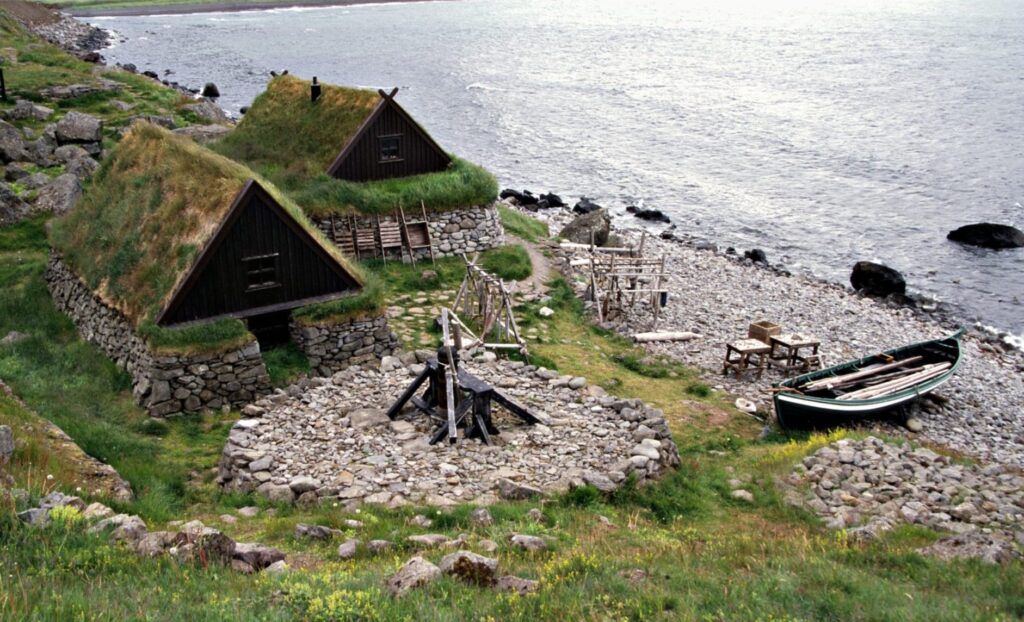
The year is 1615. It all began on September 20. A terrible storm struck the Westfjords. A fleet of Basque whaling ships saw three of its vessels destroyed by drifting ice at Trékyllisvik, near Reykjarfjördur. The 80 sailors were forced to spend the winter in Vestfirdir. Martin de Villafranca’s crew split up: the captain chose an island in the Isafjardardjup fjord, while others spent the winter in Bingeyri. It was cold, they were hungry, and even the livestock had been decimated by the weather. In early October, a few Basques broke into a merchant’s house and ate some dried fish. The reprisals would be horrific.
On the night of October 5, a group of Icelanders entered the foreigners’ building and executed 14 fishermen. Ari Magnusson (1571–1632), the district commissioner, convened a council in Sudavik and enacted a law legalizing the killing of “all Basques who enter the western fjords.” ” He organized a second punitive expedition to Isafjardardjup. Captain Villafranca and 17 fishermen were in turn killed, now entirely legally. Their bodies were mutilated and left there, unburied. This law was not repealed until 2015.
Publication of the book “Iceland, 1615 – Spanverjavigin – The Massacre of the Basques”


The account of the massacre of Basque whalers written by Jon Guđmundsson (1574–1658), known as “the Scholar,” is a unique document for studying the interactions between Basque fishermen and Icelandic peasants during the whaling seasons. A critical edition was prepared in English by Viola G. Miglio, a linguist at the University of California, Santa Barbara. This edition, translated into French by Mathilde Morin, an ethnologist at the University of Oxford and the EHESS, has just been published by Haizebegi.
Reading of “The True Account” by Jon Guđmundsson Lærdi

Icelandic actor Elfar Logi Hannesson, who describes himself as the only actor working in the Westfjords region, reads Jon Guđmundsson’s story. A simultaneous translation into Basque and French is displayed on a large screen.
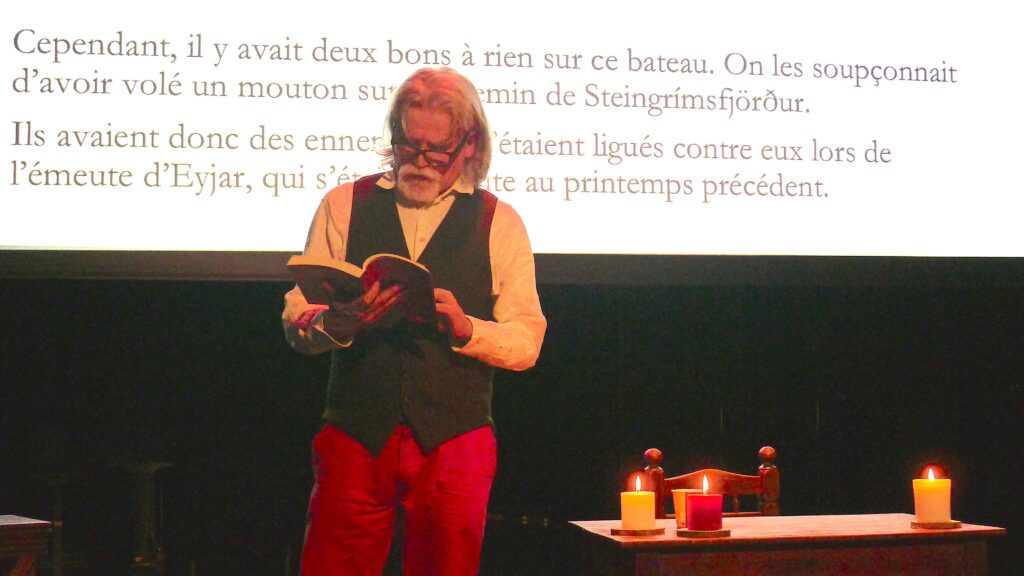
Excerpt from the “True Account” of the massacre of Basque whalers in Iceland in 1615.
“(…) After the battle was over—which took place on a Saturday, the first day of winter—all the bodies were completely stripped and thrown into the sea. But before that, they were subjected to all sorts of humiliations. Some thought it was a rather malicious and spiteful pastime, while others found it amusing and entertaining, since their leader had told them they could do whatever they wanted with the dead.
The bodies of the deceased were tied together around the waist or neck with ropes. Some people tell these stories, but I did not see them, because I was traveling south through the highlands at the time… Consequently, I did not see their genitals cut off, nor their eyes gouged out, nor their ears sliced off, nor their bellies stabbed at the navel or anything of the sort, and in the end, they were all thrown into the sea.”
For more information:
Read the article “In the Footsteps of the First Basque Whalers” – National Geographic, August 3, 2018
Read the article “Why Did Icelanders Have the Right to Kill Basques… Until Today?”, Sybiline’s blog, April 30, 2015