


The son of the renowned percussionist Djamchid Chemirani, Bijan Chemirani has himself become a master of the zarb, an ancient Iranian percussion instrument. As part of the Haizebegi Festival, he reflects on his career and the new musical program he created with his brother Keyvan, *Tales of New Ancient Rhythms*.
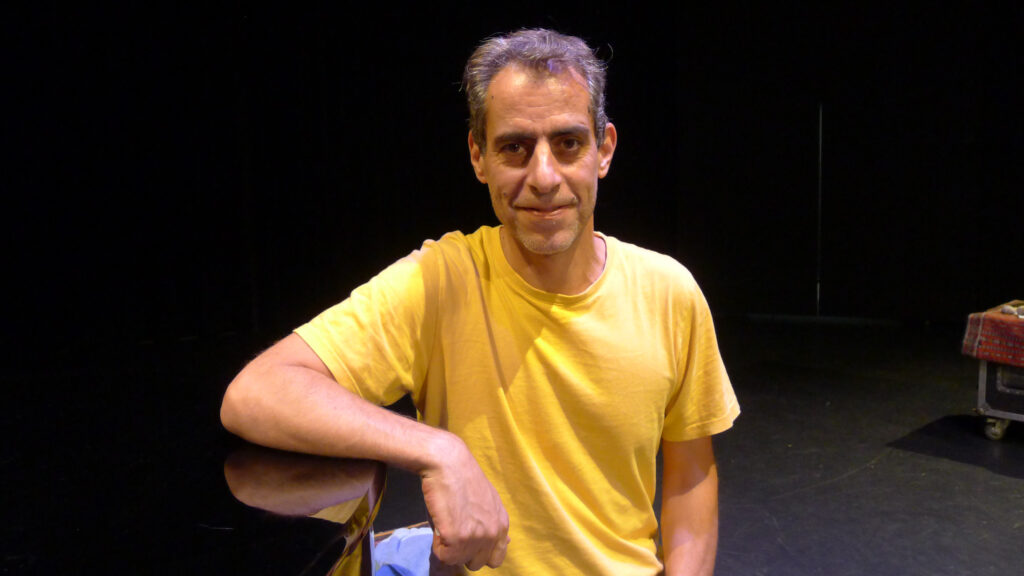
— Your music places a special emphasis on the zarb, not only as an accompaniment but also as a solo instrument. Where does this special affection for the instrument come from?
Bijan Chemirani: If we really start with the instrument and the music, I’d say it’s a very simple instrument—just a hollowed-out piece of wood with a goatskin stretched over it. But I find it has a lot of expressiveness, a whole range of varied sounds, from low to high, on both the wood and the skin, with a lot of dynamic range. Our dad taught us how to play it. It’s an oral tradition—in other words, we didn’t learn through music theory. He plays, we watch him, we listen, and we memorize. We formed a trio with our dad, which toured for about twenty years, all over the world. That wasn’t really our original plan—we weren’t convinced we’d end up touring the world; we mostly played at home, when we were together, just for fun. But we got an offer for our first concert, which led to a second, then a third… and then we kind of got swept up in it all. It was a pretty ideal introduction, because before we even picked up the instrument, we’d heard him play a lot at home while he was practicing his scales with other musicians. There were a lot of classical musicians from Iran at the time, and pretty soon, musicians from other genres started reaching out to him. We were hooked right away.
— Music is a family affair for you, with your father and siblings, but you and Keyvan have pursued separate careers. What made you want to perform together on stage?
Bijan Chemirani: Yes, we wanted to do this because we’ve been playing together for about 30 years now, and we wanted to come together in a sort of experimental setting. You mentioned the zarb, and it is indeed a somewhat central instrument. But we’ve also expanded the range of percussion and melodic instruments, whether it’s the santur for Keyvan or the lutes for me. I think it was a necessity to have that kind of complement—when you’re playing rhythm, it’s obviously exciting and there’s so much to it, but having a melodic instrument really rounds it out. And it works both ways, by the way—for a melodist to work on rhythm. It’s incredibly enriching. And then it’s a lot of fun to play together; we know each other very well—we’re family…
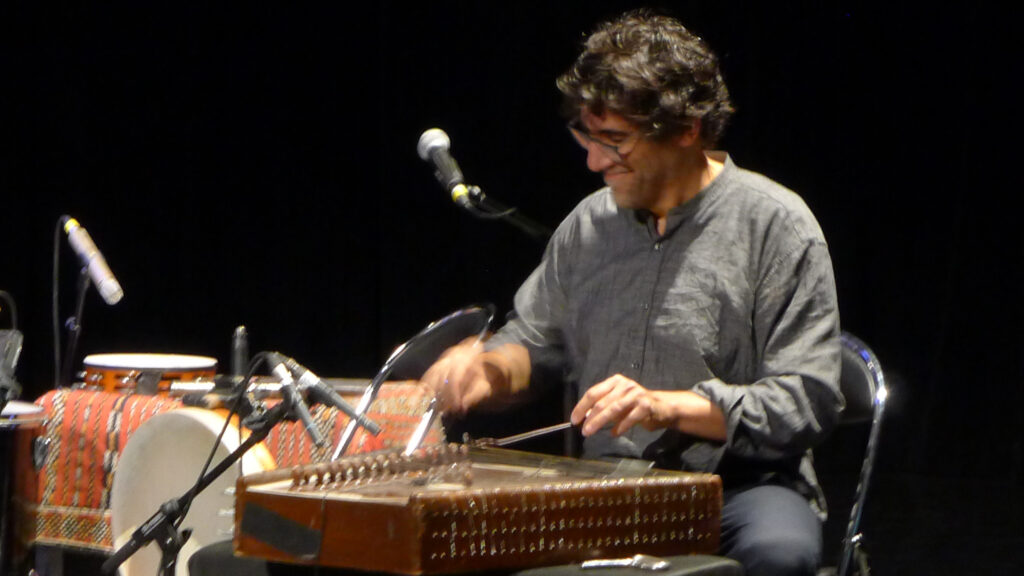
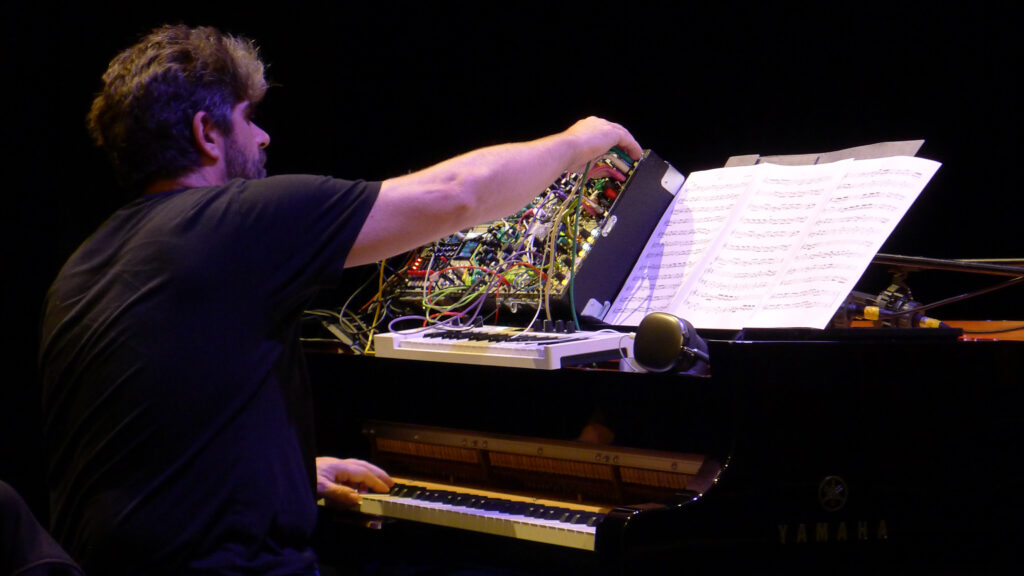
— For this 10th edition of Haizebegi, you’re also performing alongside Benjamin Moussay, a jazz pianist, and Yvlin, a violinist with the Deutsche Oper Berlin. Is this an attempt to foster exchange through music? Are you trying to create a dialogue between musical styles that might not otherwise come together?
Bijan Chemirani: That’s right—yes, it’s something along those lines. Stepping out of your comfort zone, going out to confront new things. In the case of both Benjamin and Yvlin, they’re truly very open-minded musicians with very different backgrounds—jazz and classical music. What’s very important to me—and to us, I think—more than the specific instruments we play, is that everyone wants to connect with one another. It doesn’t necessarily have to be: “I’ll come into your space,” or “you’ll come into mine,” but maybe we meet somewhere in between, and we find a way to create together. Both of them are incredibly open-minded; they’re attuned to rhythms, and they’re eager to discover new rhythmic patterns. We had that residency at Royaumont, and it’s something that’s becoming more and more precious—being able to get together, to rehearse, but also to explore, to try things out, to go back, to take a different path…
— How did you put together your repertoire, given such different musical backgrounds?
Bijan Chemirani: We didn’t arrive with anything set in stone, with a specific plan. But we did come with bits and pieces of compositions, themes—sometimes just a rhythmic pattern—and we built around that. Keyvan brought songs he’d put together from start to finish, where everyone had to find their own space. I brought a few of my own, too. Sometimes we co-composed—meaning one person would bring an element, and the other would add a counter-melody or additional parts. So, it was really like a game of Tetris, piecing together all these elements while listening to everyone’s ideas.
— Why the title *Tales of New Ancient Rhythms*?
Bijan Chemirani: It’s also called *Tales of Nâ*. To me , that’s almost better than *New Ancient Rhythms*, because you don’t know what it’s about—is it a person? It’s a little more mysterious. It’s also a little nod to a master of the kora, a Malian musician named Ballaké Sissoko, who recorded an album with Toumani Diabaté that they called *New Ancient Strings*.
Interview by Margot Artur de Lizarraga